
One‑Day Trip: Maeklong Railway Market, Damnoen Saduak Floating Market and the Dragon Temple – A Khaosan Tour Experience
Good travel is never just about ticking off destinations on a list. It is about immersing yourself in every sound, color, smell, and emotion that a place has to offer. Bangkok is the beating heart of Thailand, a city that blends old and new, sacred and lively, chaotic and serene. Among the many experiences available to travelers, the combined journey to Maeklong Railway Market, Damnoen Saduak Floating Market, and the extraordinary Wat Samphran (Dragon Temple) stands out as one of the most exciting day trips.
This tour departs conveniently from Khaosan Road, the short but world-famous street in the Banglamphu district. Despite stretching for only about 410 meters, Khaosan Road has earned a reputation as an international travel hub. Backpackers and holidaymakers from every continent gather here to find affordable accommodation, enjoy street food, shop for souvenirs, and book tours that whisk them away to every corner of Thailand. It is from this bustling base that many travelers begin their adventures beyond Bangkok, and this particular package is one of the best-sellers for good reason.
The day is full of contrasts: from watching trains roll through a crowded marketplace, to gliding along canals lined with floating vendors, to ending in awe at a pink tower wrapped by a colossal dragon. Each stop tells a story about Thai culture, ingenuity, and spirituality. Let’s explore in detail what makes this trip so memorable.
Maeklong Railway Market – The Charm of a Market on the Tracks
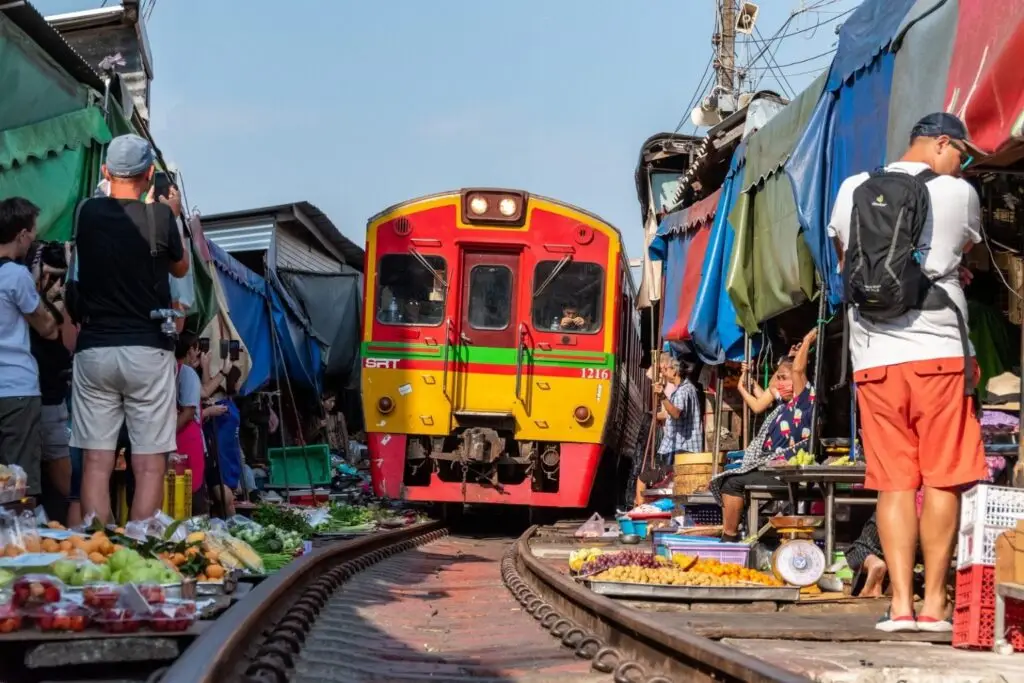
The first highlight of the journey takes travelers to Samut Songkhram province, where the Maeklong Railway Market awaits. Unlike any other market in the world, this bustling bazaar is laid out directly along the railway tracks. Local vendors sell everything from fresh vegetables and seafood to spices and household goods, with their stalls only inches away from the rails.
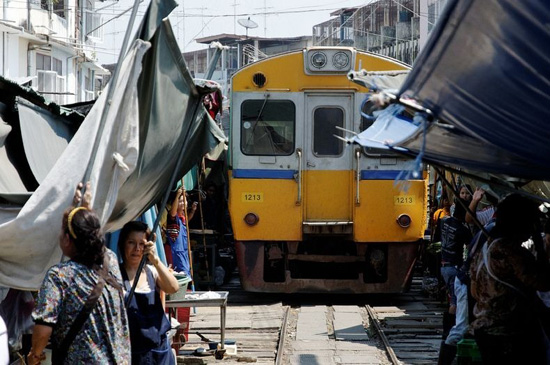
What makes it extraordinary is the way life continues seamlessly around the arrival of the train. Several times a day, a horn sounds in the distance, and vendors move in unison with practiced speed. Umbrellas are folded back, baskets are shifted, and goods are pulled just far enough to make way. Within seconds, the train slowly passes through the middle of the market, brushing past displays of mangoes, chilies, and freshly caught fish. Once the last carriage disappears, the entire market springs back to life, as if nothing unusual had happened.
This choreography of movement has earned the Maeklong Railway Market worldwide fame. Travelers eagerly position their cameras to capture the moment when the train glides inches away from their lenses, and locals smile knowingly, proud of their unique way of life.
Journey to the Market
The tour begins with hotel or meeting point pick-ups between 08:45 and 09:00 AM. Guests are driven out of central Bangkok towards Kalong Station, a charming stop surrounded by salt fields. Boarding the train here is part of the adventure itself. The short ride provides glimpses of rural Thailand: palm trees swaying, workers harvesting salt, and children waving from the roadside.
As the train approaches the market, anticipation grows. You can hear the buzz of the crowd and see umbrellas retracting before the train even enters. Travelers lean out with cameras ready, capturing the famous “umbrella closing” moment that has become a signature memory of the tour.
Why It’s Special
Visiting Maeklong Railway Market is more than a spectacle; it is a window into resilience and adaptation. Instead of relocating when the railway was built decades ago, the vendors embraced it, turning a challenge into a cultural trademark. Touring here gives travelers not only the thrill of watching a train pass through a market but also an appreciation of Thai ingenuity in maintaining tradition despite modern infrastructure.
Damnoen Saduak Floating Market – Long-Tail Boat Life
From the railway market, the tour continues deeper into the province of Ratchaburi, where the Damnoen Saduak Floating Market awaits. If Maeklong represents the collision of modern transportation with traditional commerce, Damnoen Saduak embodies the timeless beauty of life on water.
First Impressions
The approach to the floating market is already scenic. Canals stretch like ribbons across the landscape, shaded by coconut palms and banana trees. Upon arrival, travelers transfer onto a long-tail boat – the iconic wooden vessel powered by a roaring engine, instantly recognizable by its long propeller shaft.
Gliding along the canals, guests witness a living museum of Thai riverside culture. Wooden houses stand on stilts, laundry flutters in the breeze, and children jump into the water with carefree laughter. The canals are alive with movement: boats laden with fruits, steaming bowls of noodles, grilled skewers, and colorful souvenirs float past, each rowed skillfully by a vendor wearing a broad straw hat.
Market Experience
The tour provides around 90 minutes of free time at Damnoen Saduak. This allows travelers to stroll along the walkways, sample local snacks, and browse for handicrafts. Some may choose to pay a little extra for a paddle boat ride, which slips into the smaller side canals where life feels quieter and more intimate. Here you can see elderly women preparing fresh coconuts, artisans selling hand-carved wooden elephants, or farmers loading vegetables directly from their gardens onto boats.
Popular snacks include coconut ice cream served in husks, crispy Thai pancakes, and grilled bananas. Bargaining is common, and while vendors may sometimes quote tourist prices, polite negotiation is part of the experience.
Why It’s Special
Damnoen Saduak Floating Market is the most famous of its kind in Thailand, and for good reason. It preserves a way of life that predates highways and shopping malls, when canals were the main arteries of transport. For travelers, the floating market is not only about shopping but about understanding how waterways shaped communities. The lively atmosphere, the mix of colors, and the sounds of boat engines and vendors calling out create a sensory feast that feels uniquely Thai.
Wat Samphran (Dragon Temple) – Architecture Like No Other
After the vibrant market experiences, the tour takes a turn towards spirituality and awe with a visit to Wat Samphran, better known as the Dragon Temple. Located in Nakhon Pathom province, this site is unlike any other temple in Thailand – or in the world.
First Sight
From afar, the temple appears surreal: a 17-storey pink cylindrical tower wrapped tightly by a colossal dragon. The dragon’s green and red body coils upward in an elegant spiral, its head stretching high into the sky as if roaring triumphantly. The sight is breathtaking and often leaves first-time visitors speechless.
The dragon is not merely decorative. Inside its body lies a winding staircase that once allowed pilgrims to climb from the bottom of the tower to the top. Although some parts are deteriorated, sections remain accessible, offering a symbolic and physical journey upwards – from the human realm toward heaven.
Symbolism and Legends
The temple’s design is rich with meaning. In Buddhist cosmology, dragons or Nagas are guardians of sacred spaces and symbols of spiritual strength. According to legend, a Naga once requested ordination from the Buddha, inspiring the motif of the dragon climbing toward enlightenment.
Wat Samphran was officially registered in the 1980s, but its unique design has made it a point of fascination for both Thai devotees and international travelers. Beyond the tower, the temple grounds feature statues of giant turtles, rabbits, and other animals that carry symbolic messages from Buddhist teachings.
Visiting the Temple
Guests usually arrive at Wat Samphran around 13:30 and have about an hour to explore. Travelers can admire the tower from outside, take photos of the dragon coiling majestically against the sky, and walk through the serene grounds filled with greenery and sculptures. For those willing to climb, the interior passage of the dragon offers a unique vantage point. At the top, panoramic views stretch over the countryside, rewarding the effort with both beauty and serenity.
Visitors are reminded to dress modestly as this is an active place of worship. The temple is open daily from 6 AM to 6 PM, and while there is no fixed ticket price, a donation of around 80 baht is kindly requested to support maintenance.
Why It’s Special
Wat Samphran stands out because it defies the expectations of what a Buddhist temple should look like. Where most temples emphasize gilded halls and pointed stupas, this one dares to reimagine sacred architecture with bold creativity. The dragon wrapping around the tower captures the imagination, making it a must-see for anyone intrigued by architecture, mythology, or spirituality.
Tour Schedule
Here is a typical schedule for the day trip:
08:45–09:00 – Pick-up from hotels or meeting points in Bangkok, then transfer to Kalong Station.
10:15 – Arrive at Kalong Station, located in a salt-field community. Board the train heading to Maeklong.
11:00 – Explore Maeklong Railway Market and witness the train passing through.
11:45–13:30 – Continue to Damnoen Saduak Floating Market. Long-tail boat ride and free time for shopping.
13:30 – Travel to Wat Samphran, the Dragon Temple, and admire the unique 17-storey pink tower wrapped by a dragon.
14:30–15:30 – Explore the temple grounds, climb inside the dragon, and enjoy panoramic views.
15:30–16:00 – Depart for Bangkok, ending the trip near Khaosan Road or Sam Yot MRT Station.
Visitor Tips
Be Patient with Pick-ups – Because this is a join-in tour, vans stop at multiple hotels or hostels to gather guests. The process can take some time, so travelers are encouraged to relax and wait.
Traffic and Weather – Routes and schedules may change depending on road conditions or rain. Flexibility is part of the journey.
Shopping at Markets – Vendors may quote higher prices to tourists. Don’t feel pressured to buy. Bargaining politely or simply smiling and declining is perfectly acceptable.
Comfortable Clothing – Lightweight clothes and a hat are useful for markets, while modest attire is recommended for temple visits.
Stay Hydrated – The tour includes drinking water, but carrying an extra bottle is wise in Thailand’s heat.
Camera Ready – Both the railway market and dragon temple offer spectacular photo opportunities, so keep your camera or phone handy.
Conclusion
The Maeklong Railway Market – Damnoen Saduak Floating Market – Dragon Temple tour is a journey that captures the essence of Thai culture in a single day. From the thrilling moment of watching a train pass through a bustling market, to the timeless rhythm of life along canals, to the awe-inspiring sight of a dragon spiraling around a pink tower, the experiences are diverse yet deeply connected.
For travelers staying near Khaosan Road, this tour is an accessible and unforgettable way to explore beyond Bangkok’s city center. It combines excitement, tradition, and spirituality in equal measure, ensuring that every participant leaves with lasting memories and a deeper understanding of Thailand’s charm.